

ORDO
Intelligent Operations System
ORDO is a manifestation of an operational decision-making system architected specifically for highly complex, risky, and dynamic environments. Going beyond conventional data visualization functions or standard monitoring, ORDO serves as a systemic framework that guarantees the accuracy, relevance, and accountability of decisions in the real-world operational field.
Developed by AXIOMA, this system was born to answer a fundamental challenge in the industry: delivering technology solutions capable of providing real impact and high precision even in the most challenging operational conditions.

Mitigation of Operational Complexity.
System Fragmentation and Data Integration Challenges.
Standalone safety system
The hauling system focuses on numbers
Positioning systems are used generically
Data is available, but it is not connected to decisions
This phenomenon results in a massive accumulation of data volume but a deficit in strategic clarity. ORDO is designed to mitigate this fragmentation—not through wholesale substitution of existing infrastructure—but through systemic orchestration that ensures all technological components operate synchronously and with discipline. This approach guarantees the transformation of raw data into precise insights for every operational level.
ORDO IS
ORDO architecture serves as a main pillar in managing operational complexity through four fundamental functions:
- Strategic Decision Orchestration System.
- Cross-Ecosystem Integration Architecture.
- Synergy of Operational Reality and Data Validation.
- Precision Technology-Based Decision Governance Infrastructure.
ORDO IS NOT
To maintain Operational Intelligence standards and reliability in high-risk environments, ORDO is defined by the following boundary parameters:
- Beyond Conventional Monitoring Instrumentation.
- System with Integrated Accountability.
- Decision Support, Not Authority Substitution.
- Structured Systemic Ecosystem.

OmniCore
Governance & Accountability

META
Decision & Risk Evaluation

NEXA
Context & Situation Modelling

NOVA
Edge & Real-World Signals

Physical Operations
ORDO ARCHITECTURE OVERVIEW
ORDO is built on four layers of clear responsibility. Each layer has a specific role, boundaries, and defined relationships.
These layers ensure that:
- Data is not mixed with decisions
- Decisions are not taken out of context
- Every action can be audited
NOVA
Reality & Edge Layer
NOVA - Connecting Systems to the Real World
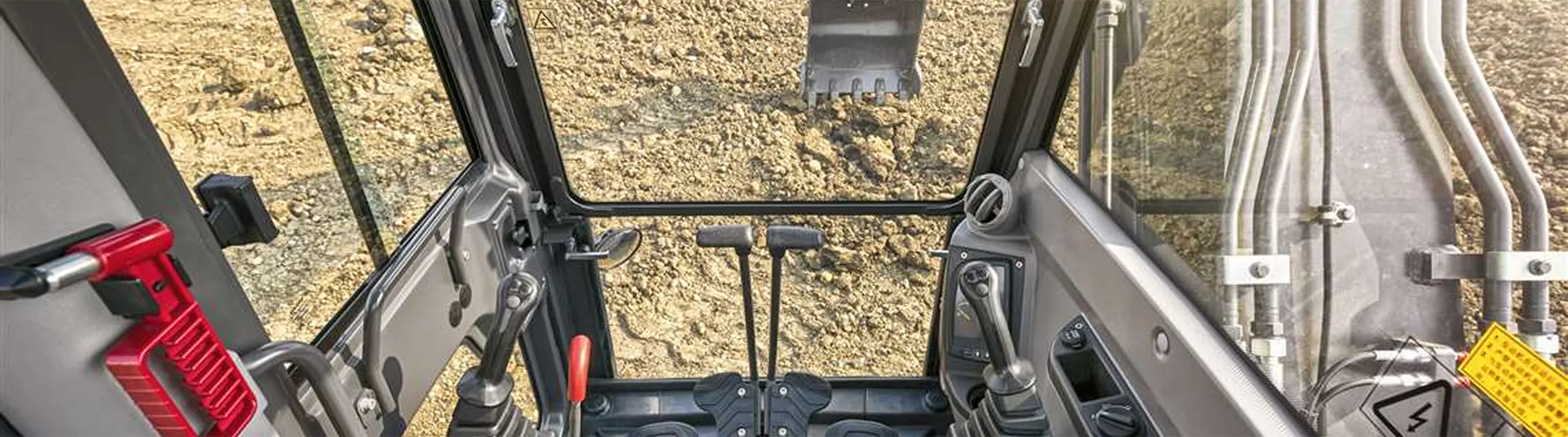
NOVA is responsible for capturing field conditions directly. It is closest to the reality of operations.
NOVA's role:
- Captures signals from the field
- Operates at the edge
- Continues to work under degraded conditions
NOVA Does Not Make Decisions.
It ensures that what the system receives is an honest representation of field conditions.

NEXA
Context Layer
NEXA - Creating Meaning from Data
NEXA is responsible for establishing operational context. It connects raw signals to real-world situations:
- Where the event occurred
- Under what operating conditions
- With what roles and activities
Without context, data is just numbers. NEXA ensures that data becomes meaningful information.

META
Decision Layer
META - Evaluating Risks and Options
META is the layer where decisions are evaluated.
It does not act impulsively, but considers:
- Operational risk
- Safety impact
- Policy consistency
META does not work alone. It depends on the quality of context from NEXA and the reliability of reality from NOVA.

OmniCore
Governance Layer
OMNICORE - Maintaining System Accountability
OMNICORE ensures that every decision:
- Complies with site policy
- Is explainable
- Is traceable
OMNICORE is the reason why ORDO can be used in environments with high safety and audit requirements.
How ORDO Works
Conceptually, ORDO works in cycles.
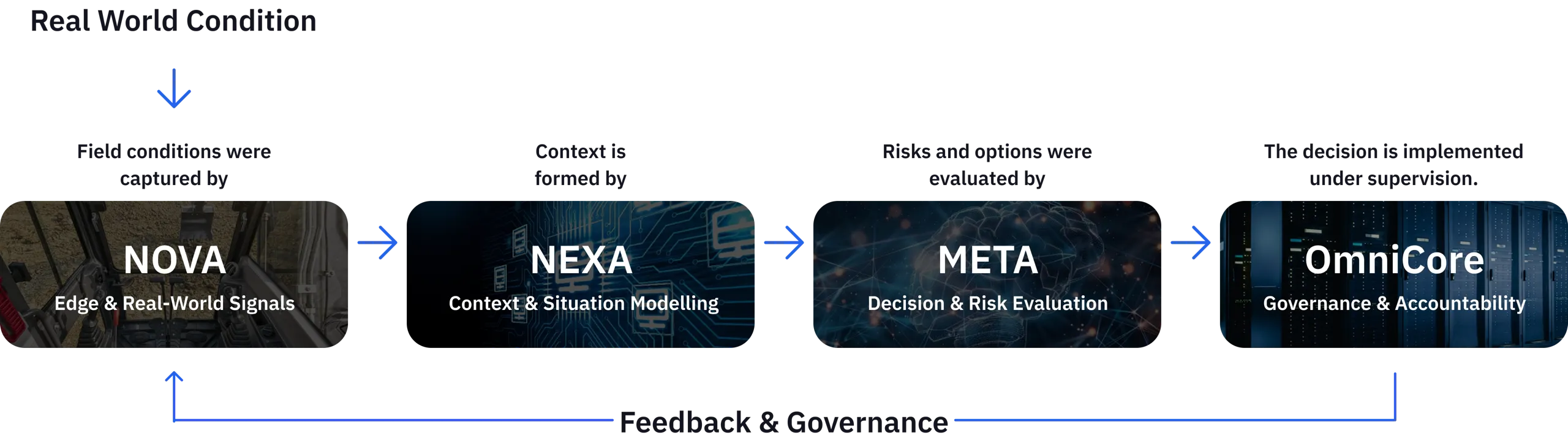
This cycle is continuous, adapting to changes in operating conditions.
Why ORDO Is Different
ORDO was built on the principle:
Edge-First
Not cloud-only
Context-Aware
Not a static rule
Decision-Driven
Not solely data-driven
Governance by Design
Not an afterthought
This is what makes ORDO relevant for mining operations, not merely compatible.
Where ORDO Is Used
ORDO is used as the foundation of the system for:
Work Safety
Collision Prevention
Operator Fatigue Management
Hauling Optimization
Operational Position Clarity
Responsibility & Trust
ORDO does not take over human responsibility. It helps people make better decisions, with the right information and clear context.

Transparency

Consistency

Accountability
Build a Reliable Operational System.